
Courier Service FAQ
This courier service FAQ from Redline Courier Service answers the questions California businesses ask most often. Specifically, we cover same-day, medical, financial, and legal courier delivery questions before you book.
Answers Built From Real-World Courier Operations
Explore practical answers about healthcare logistics, orthopedic and hospital deliveries, secure financial services, state filings, chain of custody, customized workflows, and time-critical transportation throughout California.
A dedicated same-day courier is dispatched around the requirements of one shipment instead of moving the order through a parcel network with multiple terminals, sorting points, and scheduled line-haul movements. Redline Courier Service assigns the appropriate vehicle and delivery procedure to the order, monitors progress, and records the required pickup and delivery information.
This model is especially useful when timing, direct transportation, special handling, facility access, documentation, or customer-specific instructions matter more than a standard next-day delivery window.
Redline Courier Service supports time-critical and after-hours transportation when advance scheduling is not possible. The dispatch team reviews the pickup location, delivery deadline, package characteristics, access instructions, and required vehicle before assigning the order.
For the fastest response, provide all known details at the time of dispatch, including contact names, receiving hours, reference numbers, loading requirements, and any facility-specific procedures.
Provide the complete pickup and delivery addresses, onsite contacts, phone numbers, ready time, deadline, package count, approximate size and weight, and any special handling requirements. Redline Courier Service can also capture customer-defined information such as purchase orders, part numbers, contract numbers, surgery or case numbers, department names, and billing references.
Accurate order information helps dispatch select the right vehicle, prevents unnecessary delays, and creates cleaner billing and delivery records.
Yes. Redline Courier Service can provide time-stamped status events, electronic delivery records, signatures when required, and uploaded pickup and delivery photographs for scheduled services. The exact proof requirements can be customized by customer and order type.
When a photograph, signature, reference number, package count, or other required step is built into the workflow, the driver must complete that step before the order can be marked picked up or delivered.
Redline Courier Service supports hospitals, surgery centers, clinics, laboratories, pharmacies, medical vendors, and healthcare support departments. Common orders include operating-room materials, orthopedic implants, surgical instrumentation, pharmacy items, laboratory materials, documents, equipment, interfacility transfers, and urgent replacement products.
Orders can include department-specific instructions for receiving, sterile processing, the operating room, central supply, loading docks, security desks, and other controlled access points.
Yes. Redline Courier Service can configure customer-specific instructions within the delivery workflow. A driver may be required to check in at a designated entrance, contact a department, verify a surgery or case number, photograph the package, obtain a named signature, record a receiving location, or complete another required step.
The order cannot be finalized in the software until the required instructions have been completed, helping create consistency across recurring hospital and surgery-center deliveries.
Yes. Scheduled routes are useful for predictable transfers between hospitals, clinics, laboratories, pharmacies, warehouses, and vendor locations. STAT and on-demand orders can operate alongside the scheduled route when an urgent need cannot wait for the next planned stop.
Redline Courier Service can separate the workflow, billing references, proof requirements, and delivery priorities for each service type.
Customer-defined identifiers can be required when the order is entered and again during the delivery process. These may include surgery numbers, case numbers, purchase orders, product or part numbers, facility departments, or other customer references.
Matching the transportation record to the customer’s own process improves billing accuracy and helps drivers confirm that the correct product is being delivered to the correct destination.
Redline Courier Service transports orthopedic and surgical materials such as implant systems, instrument trays, loaner sets, trauma products, joint-replacement components, sterile or packaged surgical products, and urgent replacement items. The service can support vendor-to-hospital, warehouse-to-surgery-center, hospital-to-hospital, and return movements.
Because orthopedic orders are often tied to a specific procedure, Redline Courier Service can capture surgery, case, product, facility, and delivery-contact information directly in the order workflow.
Redline Courier Service can follow the facility’s approved receiving path for operating-room support, sterile processing, central supply, or another designated department. The driver receives the customer’s instructions before arrival and may be required to contact a representative, use a specific entrance, record the receiving department, and collect the required confirmation.
Access and handoff procedures vary by facility, so the customer’s written process should be established before recurring service begins.
Yes. Redline Courier Service can schedule outbound deliveries and the related return movement as separate trackable orders. Return instructions can identify the correct warehouse, vendor, branch, package count, case reference, and required proof.
This is especially useful when products must be returned promptly after a procedure and the customer needs clean records tying both transportation legs to the same surgery or account.
When a procedure time, facility, product requirement, or receiving contact changes, dispatch can update the active order and communicate the revised instructions to the assigned driver. The change should be provided as early as possible and include the customer reference that identifies the affected case.
Redline Courier Service’s customized order fields help keep urgent changes connected to the correct surgery, product, and billing record.
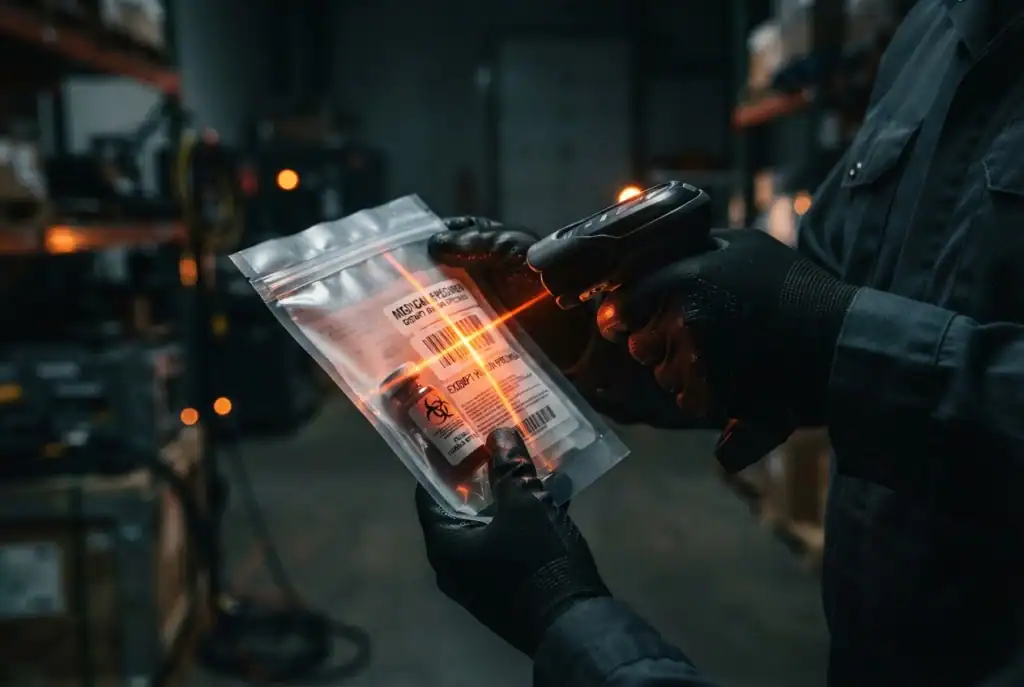
Pharmaceutical test samples are transported in appropriate biohazard transport coolers and handled according to the customer’s written packaging, environmental, timing, and chain-of-custody requirements. Redline Courier Service can support ambient, controlled room-temperature, refrigerated, and frozen transportation workflows when the customer defines the required condition and supplies or approves the packaging method.
The order record can capture sample references, pickup and delivery confirmation, required photographs, contacts, and handling instructions.
Yes, when the required environment, packaging, timing, and acceptance procedure are clearly established by the customer. Redline Courier Service can configure orders for ambient, room-temperature, refrigerated, or frozen handling and communicate those requirements to the driver.
Customers should specify the required range, approved container, monitoring method, maximum transit time, and what to do if a condition cannot be maintained or verified.
Redline Courier Service supports the transportation of properly packaged laboratory and biohazard materials under customer-defined procedures. The shipper remains responsible for identifying, classifying, packaging, labeling, and preparing the material as required for transport.
Redline Courier Service’s workflow can require reference numbers, container counts, photographs, signatures, receiving contacts, and other chain-of-custody steps before the order is completed.
Yes. Redline Courier Service’s software can be configured to capture customer-specific references such as sample numbers, study numbers, batch numbers, purchase orders, project identifiers, or other internal fields. Those references remain attached to the order from entry through proof of delivery and billing.
This reduces manual reconciliation and makes it easier to locate a transportation record using the same identifiers your team already uses.
Redline Courier Service requires deposits to be placed in tamper-resistant bank bags. During transportation, deposits are stored inside fire-resistant locking transport bags. The service can also include documented pickup and delivery events, customer-specific handoff instructions, required reference information, and proof of delivery.
The customer should establish authorized contacts, approved bank locations, deposit preparation requirements, and exception procedures before service begins.
A cash exchange service helps a business replace larger-denomination currency with the smaller bills or coin rolls needed for daily operations. Redline Courier Service picks up the prepared currency from the customer, transports it to the customer’s designated bank, completes the requested exchange under the bank and customer’s instructions, and returns the exchanged funds.
This service is popular with businesses that need reliable change availability but do not want employees leaving the workplace to make bank runs.
The customer should provide the total amount, requested denominations, designated bank branch, authorized account or transaction procedure, pickup and return contacts, preferred timing, and any special security instructions. Funds should be prepared in the approved tamper-resistant packaging before pickup.
Redline Courier Service can add customer reference numbers and required verification steps to the order so the exchange is documented and billed correctly.
Yes. Bank deposits and cash exchanges can be scheduled on recurring days and time windows. The route can include separate pickup, bank, and return requirements, along with customer-specific contacts and proof steps.
A recurring plan reduces the need for employees to leave the workplace and creates a consistent transportation record for each scheduled banking movement.
No. A bank deposit service transports a prepared deposit from the business to its designated financial institution. A cash exchange service transports prepared currency to the bank and returns smaller denominations or coin rolls requested by the customer.
Some customers use both services on the same scheduled route, while others keep them separate for accounting, security, or operational reasons.
Government & Legal Logistics includes time-sensitive document transportation and filing support for courts, state agencies, county offices, city departments, licensing bodies, law firms, corporate legal departments, accountants, escrow companies, and other professional organizations.
Orders may involve court filings, state filings, Secretary of State submissions, county recorder deliveries, permit or licensing documents, document retrieval, courtesy copies, and confirmed delivery to a designated agency or office.
Yes. Redline Courier Service can deliver filing packages to designated California state agencies according to the customer’s instructions and the agency’s receiving procedures. The customer is responsible for preparing the correct forms, fees, copies, cover letters, and filing instructions.
Redline Courier Service can document the delivery, return receipts or stamped copies when available, and connect the order to the customer’s matter, client, contract, or reference number.
Redline Courier Service can transport prepared submissions to the designated Secretary of State location and retrieve documents when the customer provides complete instructions. Availability, processing time, fees, appointment requirements, and accepted filing methods are controlled by the agency and may change.
For urgent matters, provide the exact filing type, deadline, return requirements, customer reference, and contact person before dispatch.
Yes. Redline Courier Service can require matter numbers, contract numbers, client references, case numbers, purchase orders, or other customer-defined fields when an order is entered. These identifiers remain connected to the transportation record and can support cleaner billing and easier order research.
Additional required steps, such as returning a stamped copy or photographing the receiving location, can also be built into the workflow.
No. Redline Courier Service provides transportation and delivery support, not legal advice. The customer is responsible for the legal sufficiency, filing method, deadline calculation, required fees, copies, service requirements, and agency acceptance rules.
Redline Courier Service follows the written delivery instructions and documents the transportation events requested by the customer.
Yes. Redline Courier Service can configure customer-specific fields so orders match the identifiers already used by your operation. Examples include purchase orders, part numbers, surgery or case numbers, contract numbers, project codes, department names, sample numbers, work orders, or billing references.
Capturing those fields at order entry helps improve invoice accuracy and gives dispatchers, drivers, and customers a shared reference for the correct product and destination.
Customer-specific required steps can be configured so the driver cannot mark the order picked up or delivered until those instructions are completed. Required steps may include photographs, signatures, reference verification, package counts, contact confirmation, location information, or another customer-defined action.
This completion control helps turn written procedures into a repeatable operational workflow rather than relying only on a note that can be overlooked.
Yes. Redline Courier Service can create customized procedures by customer, location, service type, or order. A hospital delivery may require a surgery number and department handoff, while a bank route may require tamper-resistant packaging and an authorized branch contact. A manufacturing order may require a purchase order, part number, loading dock, and package photograph.
The goal is to make the transportation workflow follow the customer’s process instead of forcing every customer into the same generic delivery template.
When the correct purchase order, contract, project, surgery, part, or department number is captured with the order, the transportation charge can be matched to the customer’s own accounting structure. This reduces unidentified charges, manual research, and invoice disputes caused by incomplete references.
Required fields can also prevent an order from being entered without the information the customer needs for approval and reconciliation.
Yes. Redline Courier Service can configure uploaded pickup and delivery photographs as required steps for scheduled services. The driver must capture the required image before completing the related status.
Photo requirements should be designed carefully so they document the package or handoff without exposing confidential, personal, medical, financial, or security-sensitive information.
Chain of custody is the documented history of who controlled an item, when it was transferred, where the transfer occurred, and what confirmation was collected. Depending on the service, the record may include timestamps, driver status events, signatures, photographs, seal or package information, reference numbers, and receiving contacts.
The required chain-of-custody steps should match the customer’s risk, regulatory, contractual, and operational needs.
Redline Courier Service supports customer-specific workflow fields such as package counts, seal numbers, named signatures, receiving departments, and identification references. When configured as required, drivers must complete these fields before finalizing a delivery status.
This capability is particularly suited for high-value, confidential, medical, financial, or operationally sensitive shipments where chain of custody documentation is critical.
Yes. Package counts, seal numbers, named signatures, receiving departments, identification references, and similar fields can be included in a customer-specific workflow. When marked as required, the driver must complete the field before finalizing the applicable status.
These controls are useful for high-value, confidential, medical, financial, or operationally sensitive deliveries.
Delivery photos should document the package, quantity, condition, or approved handoff location without exposing confidential contents or sensitive labels. Customers should identify any information that must not appear in a photograph and define an acceptable photo angle or alternative proof method.
For medical, financial, legal, or proprietary shipments, the workflow should collect only the information necessary to verify the service.
The driver should not leave the shipment unless the customer’s written procedure authorizes a specific unattended-delivery method. Dispatch contacts the customer, documents the exception, and obtains instructions for redelivery, return, alternate handoff, or another approved action.
Exception procedures can be built into recurring workflows so drivers and customers know exactly what to do when the normal receiving process fails.
Yes. Redline Courier Service can design scheduled routes around required pickup windows, delivery deadlines, facility hours, recurring stops, vehicle needs, documentation, and customer-specific procedures. Routes can operate daily, on selected weekdays, or according to another recurring schedule.
A route review should identify stop order, expected volume, wait time, exceptions, holiday procedures, backup contacts, and how on-demand work will be handled.
Yes. A scheduled route can include multiple customer locations when the timing, vehicle capacity, security, and handling requirements are compatible. Each stop can have its own contact, reference fields, proof requirements, and completion instructions.
Redline Courier Service can review the stop sequence and service windows to determine whether one route or multiple dedicated routes will provide the most reliable result.
Yes. A route can include outbound deliveries, return products, interoffice transfers, bank movements, document retrievals, hospital returns, or other recurring transportation legs. Each movement can be recorded as a separate order or connected to a shared customer reference.
Clear return instructions are important when products, documents, cash exchange funds, instrument trays, or other items must come back to the originating location.
Dispatch can update the schedule, stop sequence, contacts, instructions, and active order information when the customer reports a change. Temporary stops should include the effective dates, service window, expected volume, and whether the stop replaces or supplements an existing location.
For recurring changes, Redline Courier Service can revise the customer procedure so future orders reflect the updated operation.
Vehicle selection depends on the shipment’s dimensions, weight, pallet count, loading method, dock availability, liftgate need, protection requirements, and delivery deadline. Providing accurate measurements and photographs before dispatch helps prevent sending a vehicle that cannot safely load the shipment.
Redline Courier Service reviews the order details and assigns the most suitable available equipment for the movement.
Redline Courier Service handles urgent transport of parts, components, tools, equipment, and production materials, with orders accommodating detailed requirements such as purchase orders, work orders, part numbers, dock contacts, photos, package counts, and delivery deadlines.
Direct transportation minimizes handling points, making it effective when delays could disrupt production, maintenance, repair, or customer commitments.
Yes. Redline Courier Service supports urgent transportation of parts, components, tools, equipment, and production materials. Orders can require purchase orders, work orders, part numbers, dock contacts, photographs, package counts, and delivery deadlines.
Direct transportation can reduce handling points and is useful when a delayed part may stop production, maintenance, repair, or a customer commitment.
Inside or special-handling delivery may be available when the requirements are reviewed in advance. The customer should identify stairs, elevators, loading docks, appointment rules, equipment needs, assembly or placement expectations, item value, floor protection, and the number of people required.
“White glove” can mean different things to different customers, so the exact scope should be written into the order rather than assumed.
Redline Courier Service can support airport-related pickups and final-mile delivery when the customer provides the airline, flight, airway bill or recovery number, cargo location, release requirements, operating hours, package details, and delivery deadline.
Airline availability, cargo release timing, screening, and airport procedures are controlled by third parties, so complete information and rapid communication are critical.
No exact answer found
Try a broader phrase, or contact Redline Courier Service so we can review your exact pickup, delivery, documentation, or workflow requirements.
Why California Businesses Rely on This Courier Service FAQ
This courier service FAQ hub answers the questions we hear most. For example, hospitals, laboratories, banks, escrow offices, law firms, and manufacturers across California ask us these questions. They ask before they book a same-day courier. In fact, every answer comes from real dispatch experience. In particular, we cover medical and pharmaceutical logistics, along with financial and cash-handling security. We also cover government and legal filings, chain-of-custody documentation, and custom delivery workflows built around your operation.
For step-by-step help, visit our Field Guides. You can also explore our core services: Same-Day & Rush Courier, Medical Courier, Banking, Title & Escrow, and Expedited Freight. Ready to schedule a pickup? Request courier service now, or call our 24/7 dispatch team at 866-4APICKUP.
Every question below is organized by topic, so you can find your answer fast. Same-Day Courier covers the basics of rush pickup and delivery.
Healthcare & Hospital and Orthopedic & Surgical cover hospital receiving rules, surgical case transport, and loaner instrument returns. Likewise, Pharmaceutical & Laboratory explains temperature-controlled and biohazard handling.
Financial Logistics covers bank deposits, cash exchanges, and recurring branch routes. Additionally, Government & Legal Logistics covers state filings, court deliveries, and matter-numbered tracking.
Technology & Custom Workflows shows how purchase orders and contract numbers fit into every order. Meanwhile, Security & Chain of Custody covers package counts, seal numbers, and signature requirements.
Scheduled Routes & Business covers recurring pickups across multiple locations. Similarly, Freight & Critical Deliveries covers vehicle selection, white-glove service, and time-critical airport recovery.
Ready to find your answer? Browse the topics below, or call our 24/7 dispatch team any time. Our team is ready to give immediate help with a courier service question. As a result, our California dispatchers handle same-day, medical, financial, and legal deliveries every day. That experience means they can walk you through the right process for your specific shipment.